
Here he weaves together two arguments around Shakespeare’s historical plays. One is about the power of his language. The other is about how Shakespeare uses this language to develop a shockingly modern understanding of history. First, about his language:
His words don’t rush to explain; they linger, circle, accuse, and mourn. In Richard II, power fails first in language. Legitimacy collapses before institutions do. Self-knowledge arrives only as speech exposes its own belatedness.
This essay argues that Shakespeare’s linguistic achievement and his historical achievement are inseparable. It is through language that he invented modern historical consciousness.
Long before historians learned to write about subjectivity and lived experience, Shakespeare grasped a basic truth: the past is not just a sequence of events. It is a process of meaning-making, carried out by fallible people trying to understand what has happened to them.
And that process unfolds in language—language that can hold contradiction, register the erosion of meaning, and give voice to states that hover between thought and feeling.
We can paraphrase Shakespeare easily enough. Just turn to websites like No Fear Shakespeare. What we struggle to recover is the world his language once made visible—and the kind of historical understanding it made possible.
Shakespeare asks us to slow down, tolerate ambiguity, and listen for meaning that doesn’t announce itself right away. Modern culture trains the opposite habits. We skim. We summarize. We extract. We turn difficulty into takeaways.
Shakespeare doesn’t reward that posture. He makes meaning expensive. And that cost—time, attention, patience—is exactly what modern institutions have taught us to avoid.
And then there’s the way Shakespeare deploys his extraordinary linguistic skills to invent a richly complex understand of how history unfolds.
This is where Shakespeare feels uncannily relevant.
His history plays are not celebrations of monarchy or nostalgic defenses of hierarchy. They are studies of authority under stress. Again and again, Shakespeare asks a question modern societies often avoid: what actually holds a political order together when belief in its rightness begins to fade?
Richard II offers no easy answer. Richard does not fall because he is monstrous, nor is he toppled by popular revolt. He loses power because belief in his legitimacy drains away—and because his authority no longer matches his capacity to rule.
His tragedy is not merely losing the crown; it is realizing, too late, that power works only so long as people are willing to regard it as rightful. Once that recognition disappears, no legal claim can restore it.
That insight feels painfully contemporary. Democracies today are not failing because people have forgotten the rules. They are faltering because rules alone no longer persuade. Compliance becomes transactional. Authority looks like something to seize rather than something to bear. Politics grows theatrical and suspicious—loud but hollow.
Enjoy the ride.
When Words Still Mattered
Shakespeare, Language, and the Birth of Historical Consciousness
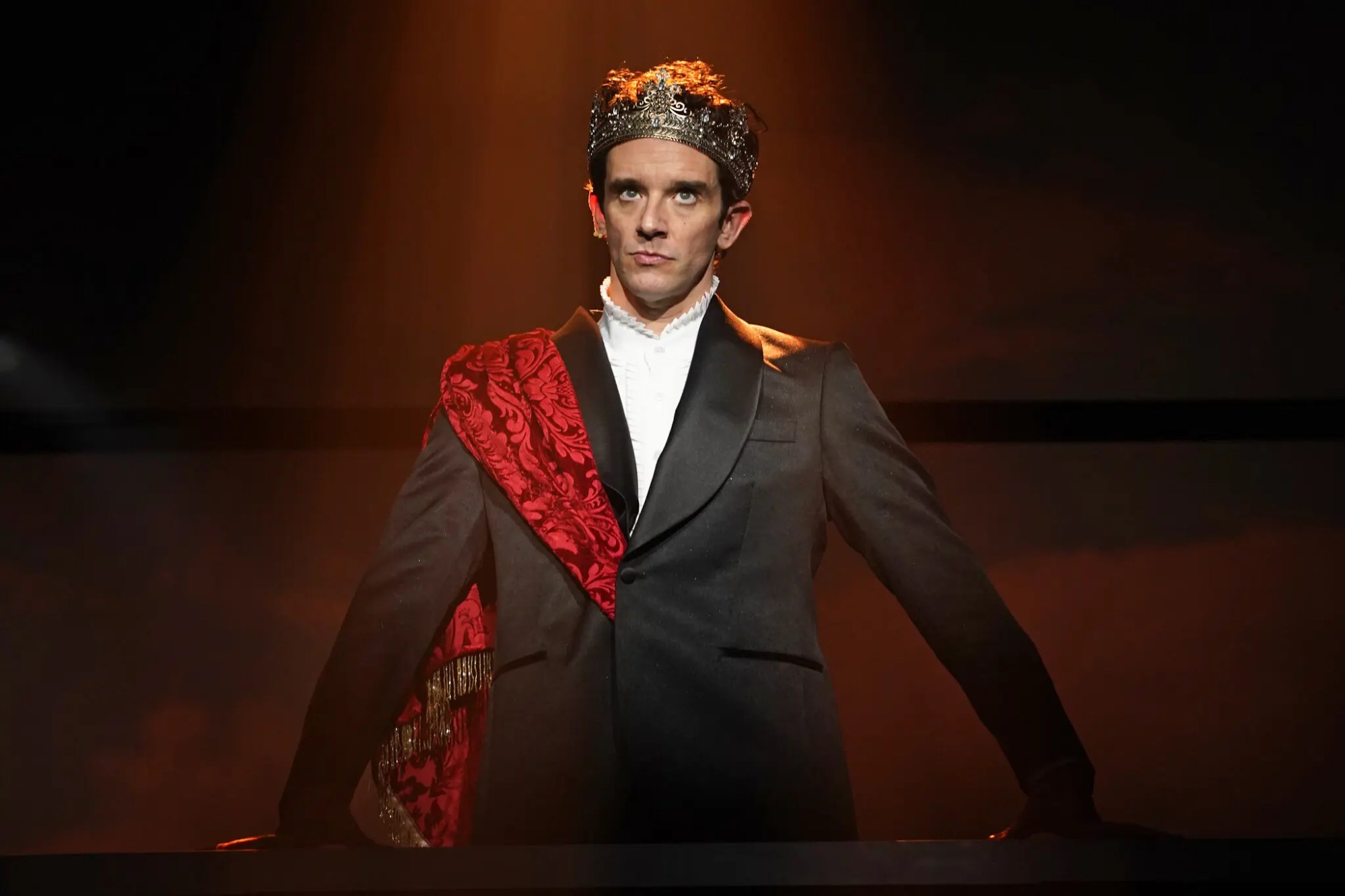
The other night, in a small Off-Off-Broadway theater, I watched Richard II performed on a nearly bare stage—no spectacle, no pageantry. What remained was voice, body, and language.
When the deposed king spoke his famous line—“Let us sit upon the ground / And tell sad stories of the death of kings”—it didn’t sound like Shakespearean rhetoric. It sounded like a confession. Not a monarch addressing subjects, but a man reckoning with loss, irony, and belated understanding.
The power of the line lies not just in what it says, but in how it moves: the downward pull of sit, the weight of ground, the slow tolling of sad stories, the ceremonial finality of the death of kings. The line asks to be absorbed, not paraphrased.
That stripped-down production made something clear what the text itself has always implied: Shakespeare’s achievement was not only dramatic or poetic. It was historiographical. He invented a way of experiencing history from the inside—of grasping how authority dissolves, how legitimacy withers, and how people make sense of power once its spell is broken. And he did this through language.
There are things Shakespeare could see and say that we struggle to name. His psychological insight remains astonishing, but his greatness also lay in the linguistic world he inhabited—a world that made certain dimensions of experience audible and thinkable in ways our own language does not.
His words don’t rush to explain; they linger, circle, accuse, and mourn. In Richard II, power fails first in language. Legitimacy collapses before institutions do. Self-knowledge arrives only as speech exposes its own belatedness.
This essay argues that Shakespeare’s linguistic achievement and his historical achievement are inseparable. It is through language that he invented modern historical consciousness.

Long before historians learned to write about subjectivity and lived experience, Shakespeare grasped a basic truth: the past is not just a sequence of events. It is a process of meaning-making, carried out by fallible people trying to understand what has happened to them.
And that process unfolds in language—language that can hold contradiction, register the erosion of meaning, and give voice to states that hover between thought and feeling.
We can paraphrase Shakespeare easily enough. Just turn to websites like No Fear Shakespeare. What we struggle to recover is the world his language once made visible—and the kind of historical understanding it made possible.
Shakespeare asks us to slow down, tolerate ambiguity, and listen for meaning that doesn’t announce itself right away. Modern culture trains the opposite habits. We skim. We summarize. We extract. We turn difficulty into takeaways.
Shakespeare doesn’t reward that posture. He makes meaning expensive. And that cost—time, attention, patience—is exactly what modern institutions have taught us to avoid.
The Linguistic World Shakespeare Lived In
Shakespeare wasn’t just writing in an older, more archaic version of English. He was working inside a very different set of assumptions about what language does—how it moves, how it makes meaning, and how it binds thought, emotion, and authority together.
That difference is hard to name because it isn’t just about unfamiliar words. Shakespeare’s English works differently at almost every level at once.
Start with vocabulary. His words are denser than ours, often carrying several meanings at the same time. A word like subject can mean a political subordinate, a topic of thought, or a person under divine authority—all at once.
Adjectives and adverbs aren’t neutral descriptors; they carry moral weight. Words like bare, hollow, sad, or anointed do work we now assign to explanation or analysis.
Sentence structure matters just as much. Shakespeare’s sentences aren’t in a hurry. Verbs arrive late. Clauses pile up. Meaning accumulates through delay and pressure.
Where modern prose races to the point, Shakespeare lets language circle, hesitate, and expose uncertainty as it unfolds.
When Richard says, “I wasted time, and now doth time waste me,” the line doesn’t explain anything. It expresses a self-realization. Time turns from abstraction into an active agent that describes Richard’s fall from power. Modern English would spell that out. Shakespeare lets the sentence judge.
That’s because Shakespeare wrote in a world where language wasn’t mainly a tool for transmitting information. It was a medium in which thought unfolds, authority is performed, emotions take shape, and meaning emerges over time.
Nowhere is this clearer than in Richard II, where language doesn’t just accompany power—it is power. Authority is audible before it’s visible, and its erosion is first heard in speech long before it shows up in action.
It’s tempting to assume Shakespeare’s language must have been as difficult for his original audiences as it is for us. But that’s mostly a modern projection. Elizabethan and Jacobean playgoers lived inside this language. They were trained from childhood in rhetoric, biblical cadence, and classical allusion.
Long sentences, inverted syntax, and layered metaphors were the normal registers of serious speech.
Shakespeare wasn’t hard to follow in the way a technical text is hard. He was demanding in the way moral seriousness is demanding. Audiences understood Richard’s words; what unsettled them was what those words revealed.
Shakespeare’s language was meant to be heard. Iambic pentameter gives it a pulse—a rhythm tied to breath, heartbeat, and ceremonial speech. Meaning arrives through sound moving through time, not through instant clarity on the page.
Modern English—shaped by journalism, bureaucracy, and digital communication—works differently. It’s optimized for speed. We skim, scan, and extract. Shakespeare asks us to slow down. His language resists haste. It demands attention and presence.
That seriousness extends into syntax. Shakespeare’s sentences don’t present finished thoughts; they think out loud. Early modern English prized long, winding constructions that allowed hesitation, reversal, and self-correction. Thought isn’t summarized after the fact. It’s staged in real time.
That matters enormously in Richard II, a play obsessed with understanding things too late. Richard keeps grasping what’s happening only as he speaks. His realizations aren’t sharp moments of clarity; they’re slow recognitions that arrive after they can no longer change anything. The syntax mirrors that delay.
This isn’t just a difference in style. It reflects a deeper disagreement about what language does. Shakespeare’s language assumes that words matter in a strong sense—that naming shapes reality, that speech can reveal truth, that poetry can expose legitimacy or fraud.
When Richard speaks of the sun, gardens, angels, or anointed kingship, he isn’t reaching for private metaphors. He’s drawing on a shared symbolic world his audience already knew. Those images didn’t need explaining; they carry meanings that his listeners understood.
Modern English lives in a more disenchanted universe. Our metaphors are often psychological or technological, our symbols private rather than communal.
This difference is clearest in how Shakespeare understands authority. In Richard II, speech isn’t just expressive. To speak like a king is to be a king. Authority lives in voice, cadence, and presence.
Richard’s tragedy is ultimately linguistic. He speaks too late—and too beautifully. His eloquence replaces action. As his political power drains away, his language grows more inward, more poetic, more aware of its own limits.
We no longer trust speech this way. Authority today lives in procedures, systems, data, and credentials. Shakespeare’s world trusted utterance. Legitimacy was something you could hear—and lose—in the sound of a voice.
That’s what makes Richard II so unsettling now. It recalls a time when words still mattered enough to make—or unmake—power.
Shakespeare’s Way of Doing History
Once you see how much weight Shakespeare gives to language, it becomes clear why he does history so differently from his sources. His history plays aren’t chronicles of events. They’re inquiries into what history feels like—how people experience power, make sense of it, and remember it once it slips away.
The contrast is clearest with Holinshed’s Chronicles, Shakespeare’s main source. Holinshed gives readers what 16th-century history promised: reigns, battles, successions, and moral lessons. Kings rise and fall, but the framework—divine order, lineage, national destiny—remains intact. History, in Holinshed, mostly happens to people.
Shakespeare takes the same material and turns it inside out. In Richard II, history doesn’t just happen in Parliament or on the battlefield. It happens inside people. The question isn’t simply who rules, but what it feels like when rule loses its footing—when legitimacy falters and fades and belief drains away.
Richard’s fall isn’t a routine transfer of power. He doesn’t just lose a crown; he loses the story that once made sense of who he was. Stripped of authority, he begins to think historically—about time, memory, loss, and contingency.
When Richard proposes sitting down to tell stories of the death of kings, he quietly redefines history itself. History becomes something narrated after the fact, shaped by perspective, soaked in emotion, and haunted by what might have been. Power is revealed as performative and fragile, dependent on recognition rather than brute force.
Notice what Richard doesn’t do. He doesn’t review policies or defend legitimacy. Instead, he catalogs how kings fall:
“How some have been deposed; some slain in war,
Some haunted by the ghosts they have deposed…”
The mystique of kingship peels away. What remains is fear, mortality, and the realization that power is always provisional. Death, Richard sees, has been sitting inside the crown all along.
This isn’t Holinshed’s history. It’s something closer to modern historical consciousness: the sense that the past is experienced as rupture, that meaning is made after the fact, and that authority rests on fragile beliefs rather than sacred guarantees.
Shakespeare stages insights historians wouldn’t fully articulate for centuries: that legitimacy collapses before institutions do; that power evaporates when belief fails; and that historical actors almost never understand what’s happening while it’s happening.
This is also what separates Shakespeare from most historical fiction. Novelists often try to make the past clearer than it was—to explain motives, smooth confusion, and translate experience into modern psychology.
Shakespeare refuses that comfort. He lets confusion stand. His characters don’t gain wisdom in time to use it. They discover—slowly, painfully—what they’ve already lost.
Historical fiction often gives us the illusion that we could understand the past if we were there. Shakespeare gives us something harder and truer: the experience of being trapped inside history, groping for meaning as events outrun understanding.
That’s why Richard II still unsettles. It doesn’t make history manageable or readily comprehensible. It makes it human.
Shakespeare and Modern Historiography: The Paths Not Taken
To say that Shakespeare anticipated modern historical consciousness is not hyperbole. Long before historians named the phenomenon, he dramatized key features of modernity: the collapse of sacred authority, the fragility of legitimacy, and the inward turn of historical meaning.
Jacob Burckhardt famously located the birth of modern historical consciousness in the Renaissance, when individuals first experienced themselves as historically situated rather than as fixed occupants of social roles. What Shakespeare adds to this insight is psychological depth.
In Richard II, the king does not merely lose power; he becomes aware of himself as a historical being—someone who once embodied authority and must now live with its loss. Time ceases to feel providential and becomes reflective, even cruel.
Max Weber’s account of disenchantment deepens the picture. As metaphysical guarantees fall away—divine right, cosmic order, inherited legitimacy—authority comes to depend on belief, performance, and recognition. Shakespeare stages this shift with extraordinary clarity.
Richard’s kingship collapses not when Bolingbroke seizes power, but when belief in Richard’s sacred authority evaporates. Once the spell is broken, his authority dissolves. Richard becomes, in effect, his own historian, narrating his fall even as it unfolds.
Yet when modern historical scholarship emerged in the 19th century, it defined itself against precisely this kind of insight. Leopold von Ranke’s call to show the past “as it actually happened” established a new ideal: objectivity rooted in documents, narrative restraint, and the suppression of authorial judgment. History became a science of sources, not a theater of power or conscience.
From that perspective, Shakespeare is methodologically suspect. He invents dialogue, compresses time, and reimagines characters. By Rankean standards, his histories are utterly irresponsible.
And yet Shakespeare captures something historicism systematically bracketed: that power is experienced not primarily as a sequence of verifiable events, but as a lived moral drama. Ranke anchored truth in archives; Shakespeare illuminated what archives cannot record—hesitation, vanity, fear, self-deception, and the erosion of belief.
Shakespeare does not so much violate historical truth as redefine it. His histories aim less at factual precision than at perceptual accuracy. They show how authority feels as it begins to fade and what it means to experience legitimacy’s collapse from the inside—truths no archive can fully capture.
Recent work in the history of emotions helps explain why Shakespeare’s histories feel so modern. These plays do not merely recount political change; they trace shifts in shame, fear, loyalty, melancholy, and grief. Richard does not simply suffer; he reflects on his suffering.
In doing so, Shakespeare anticipates a central insight of modern historiography: power is not only exercised through institutions and violence, but lived through feeling—through humiliation, anxiety, nostalgia, and loss.
What Shakespeare Could See—and What We’ve Lost
As Ludwig Wittgenstein put it, “The limits of my language mean the limits of my world.” What we can notice, name, and think depends on the expressive resources our language provides.
For all our psychological fluency—with trauma, attachment styles, and emotional intelligence—Shakespeare could see and say things that often escape us. Not because he understood the mind better in a clinical sense, but because his language brought certain dimensions of experience into focus.
His characters are not case studies. They are pressure points where obligations collide: authority and legitimacy, desire and duty, self-knowledge and self-deception. Richard II is not “narcissistic” or “depressed.” He is belatedly lucid—tragically articulate, capable of insight precisely when it can no longer save him.
Shakespeare could also dramatize the breakdown of meaning itself. In Richard II, authority collapses before any official transfer of power takes place. Richard loses legitimacy before he loses the crown. This unraveling isn’t explained in speeches or arguments—it is heard in the language.
As Richard speaks, his words become repetitive, inward-looking, and mournful, revealing a growing awareness that language can no longer sustain the authority it once carried. Modern English, trained to clarify and stabilize meaning, struggles to represent this kind of semantic unraveling.
Shakespeare could also give voice to states that hover between thought and feeling: shame, awe, foreboding, spiritual dread, existential loneliness. These require rhythm, repetition, metaphor, and sound. They require language that lingers.
Why is this harder for us?
Part of the answer lies in the dominant forms of contemporary language: bureaucratic prose, scientific abstraction, therapeutic discourse, and digital compression. These registers prize speed and treat ambiguity as a flaw.
Eloquence looks indulgent. Moral seriousness is outsourced to data, diagnosis, or procedure. Language becomes an instrument of control and self-expression rather than a medium of discovery.
Modern historiography has followed a parallel path. In recovering everyday life and marginalized voices, it has achieved real breakthroughs. But it has often sidelined the symbolic core of political authority. Power becomes a background structure rather than an existential problem. Legitimacy is negotiated or resisted, but rarely staged as something that can fail from within.
Shakespeare’s histories remind us that rulers matter not because they are admirable, but because their failures reshape the moral imagination of entire societies. When legitimacy collapses at the top, it reverberates everywhere.
Shakespeare may neglect the many, but he captures something social history sometimes underplays: how political breakdown alters collective consciousness.
The task for historians—and for anyone trying to understand power—is not to choose between archival rigor and moral imagination, but to combine them: structural analysis with interior life, social breadth with symbolic depth, institutional study with the recognition that authority is enacted through language and sustained by belief.
Where Language Still Lives
This isn’t the end of the story. Seriousness about language hasn’t vanished. It’s moved.
One place it’s very much alive is hip-hop and rap—arguably the most vital poetic traditions of the past fifty years. These forms treat language with a weight and care that Shakespeare would have recognized immediately.
Rap prizes verbal skill: metaphor, rhythm, wordplay, allusion, voice. It assumes that words do things—that naming is an act, that reputation is forged in speech, that authority can be claimed, challenged, or stripped away through language. Identity isn’t just expressed; it’s performed and made audible.
Like Shakespeare’s verse, rap isn’t primarily explanatory. It’s layered, confrontational, musical, and time-bound. It thinks in sound. It tolerates contradiction. A single line can carry biography, history, social critique, and moral judgment at once—and it only yields its meaning if you really listen. The best artists don’t simplify experience; they intensify it.
That matters, because it suggests something crucial. The problem isn’t that modern English can’t do what Shakespeare’s English once did. It’s that many of our major institutions—schools, media, politics—no longer value or cultivate that kind of language. Eloquence survives where words are still treated as consequential—where they can wound or elevate, expose or redeem.
So what would it mean to recover that seriousness?
Not a return to archaic diction. Not a rejection of psychology or history. But a change in how we listen and read.
Slowing down. Listening more closely. Paying attention to rhythm, tone, and metaphor. Letting sentences think instead of forcing them to rush to conclusions. Recognizing that precise, expressive language doesn’t decorate thought—it expands what we can see, feel, and judge.
For historians in particular, this means reclaiming something Shakespeare never surrendered: attention to how authority sounds as it begins to weaken, how legitimacy looks when belief drains away, and how people experience life – its losses, hurts, and tragedies — before they have words to explain it.
Shakespeare reminds us that language can enlarge the world. Hip-hop reminds us that it still can.
The limits of our language aren’t fixed. They’re cultural choices—about what kinds of speech we reward, what forms of eloquence we teach, and whether we treat words as disposable or consequential.
What Historians Should Learn from Shakespeare
Shakespeare matters to historians not because he gets every fact right, but because he asks better questions—and because he shows those questions unfolding in ways academic history often avoids.
Start with legitimacy. Shakespeare reminds us that history isn’t only about events, structures, or causes. It’s also about belief. Who has the right to rule? Why do people obey? What happens when that belief begins to crack?
These are the core questions of political life, yet they sit uneasily inside much professional history, which often treats power as something produced by institutions, interests, or material forces. Shakespeare treats power as more fragile—a social achievement that must be performed, recognized, and sustained.
Second, Shakespeare insists that character matters. His kings aren’t symbols or abstractions; they’re unstable people whose weaknesses and misjudgments shape events. Historians rightly resist sliding back into “great man” history. But Shakespeare shows a way through that dilemma. He doesn’t deny structure; he shows how personality and temperament interact with it—how individual failure can suddenly become decisive when institutions weaken.
Third, Shakespeare is comfortable with uncertainty. His plays refuse tidy explanations. Causes overlap. Motives remain unclear. Outcomes feel contingent and morally unsettling.
Academic history—especially as students encounter it—often resolves ambiguity too quickly. We offer conclusions instead of dilemmas, answers instead of problems. Shakespeare models a different posture. He invites us to sit with uncertainty, to experience the tension of not knowing what judgment is warranted. That’s not confusion; it’s historical seriousness.
Fourth, Shakespeare gives us interior life without turning it into therapy. He doesn’t diagnose Richard. There’s no talk of narcissism or depression. Richard’s emotions arise from his situation—the loss of status, ritual, and recognition. Feeling is shown as relational and historical, not merely psychological. In this way, Shakespeare anticipates the best work in the history of emotions.
And finally—and most importantly—Shakespeare shows how to write about history with moral weight without preaching. His plays don’t tell us what to think. They show us choices, consequences, and regrets. They force us to reckon with power as something lived and lost, not merely analyzed.
This matters for teaching. Students don’t turn to history only to memorize what happened. They’re trying to understand power, ambition, loyalty, failure, and loss. Shakespeare meets that need without simplifying the past or turning it into a sermon. Too often, historians mistake moral restraint for rigor and leave students feeling that history is informative but emotionally inert.
Learning from Shakespeare doesn’t mean abandoning archives or evidence. It means recognizing that historical understanding also requires imagination, empathy, and the courage to confront tragedy—without easy consolation.
Shakespeare and Our Contemporary Crisis
We live in a strange moment: obsessed with power yet unsure how to talk about authority. We praise democracy even as trust in democratic institutions erodes. What we are experiencing feels less like democratic triumph than a prolonged crisis of legitimacy.
This is where Shakespeare feels uncannily relevant.
His history plays are not celebrations of monarchy or nostalgic defenses of hierarchy. They are studies of authority under stress. Again and again, Shakespeare asks a question modern societies often avoid: what actually holds a political order together when belief in its rightness begins to fade?
Richard II offers no easy answer. Richard does not fall because he is monstrous, nor is he toppled by popular revolt. He loses power because belief in his legitimacy drains away—and because his authority no longer matches his capacity to rule.
His tragedy is not merely losing the crown; it is realizing, too late, that power works only so long as people are willing to regard it as rightful. Once that recognition disappears, no legal claim can restore it.
That insight feels painfully contemporary. Democracies today are not failing because people have forgotten the rules. They are faltering because rules alone no longer persuade. Compliance becomes transactional. Authority looks like something to seize rather than something to bear. Politics grows theatrical and suspicious—loud but hollow.
Shakespeare understood this long before political science did. He grasped that political orders depend not just on force or consent, but on shared stories—about why rule is justified, what obligations it creates, and what sacrifices it demands. When those stories fracture, no amount of institutional tinkering can fully compensate.
This is why Shakespeare’s histories feel newly urgent. They do not tell us how to repair a crisis of legitimacy. They show us what such crises feel like from the inside: confusion, recrimination, and the search for substitutes—nostalgia, strongmen, procedural fetishism—when authority no longer persuades.
Our difficulty thinking clearly about authority today is partly a failure of language. We have lost ways of talking about legitimacy that are neither raw power nor technical procedure. Shakespeare’s language—slow, weighty, morally charged—gave him tools we have largely abandoned.
For historians, the lesson is sobering. We often treat legitimacy as a secondary outcome—produced by growth, institutions, or movements. Shakespeare treats it as more basic and more fragile: a cultural achievement that must be continually enacted and renewed. Lose that, and history accelerates in dangerous ways.
For teachers, the lesson is sharper still. Students sense—often before they can articulate it—that authority today feels hollow. They encounter it everywhere and trust it almost nowhere. Shakespeare gives them a way to think about that unease historically, without turning it into ideology.
What the Bare Stage Revealed
That Off-Off-Broadway production made this unmistakable. With spectacle stripped away, kingship appeared as something performed rather than ordained. Authority had to be enacted moment by moment—and when the performance faltered, power vanished. Shakespeare’s lesson was made visible: legitimacy survives only as long as belief holds.
Richard’s famous soliloquy became more than a speech. Sitting on the ground, speaking among other fallen figures, he becomes both subject and narrator of history. The audience is not simply watching a king fall; it is watching a man realize what it means to become historical—to be remembered, interpreted, and judged.
You were not just hearing old words. You were hearing a culture think out loud.
Shakespeare offers no comfort. He shows that crises of legitimacy are not anomalies but recurring features of political life. Democracy, no less than monarchy, depends on shared understandings of obligation and restraint that rules alone cannot enforce.
In an age tempted to treat history as either moral indictment or nostalgic escape, Shakespeare insists on something harder: historical consciousness as tragic clarity. Not despair, but recognition—the recognition that power without legitimacy corrodes and ultimately collapses.
Shakespeare was not a professional historian in the modern sense. But he anticipated some of modern historiography’s most important insights. He developed a way of thinking historically that takes uncertainty seriously, attends to inner experience, and treats the past not as a settled account but as a field of contested and unresolved meaning.
That may be his most urgent lesson—not how to govern, but how to recognize when authority is already failing, when legitimacy has thinned to ritual, and when power continues to perform itself long after belief has begun to drain away.
Shakespeare shows that such moments cannot be repaired by law alone, or by spectacle, or even by righteous protest. They fail first at the level of meaning—when words no longer bind, when symbols no longer persuade, when people can no longer hear themselves reflected in the language of power.
What is required, then, is not merely institutional reform, but a vocabulary capable of naming what is truly at stake: loss, obligation, belief, dignity, fear.
The question is whether we still possess such a language—or whether, having lost it, we can still recognize its absence when legitimacy collapses once again.
And whether we are still willing to listen when it does.
 David Labaree on Schooling, History, and Writing