This post is a classic piece by Karl Marx, “The Fetishism of Commodities and the Secret Thereof.” It’s the last section of the first chapter in Capital, volume 1. This analysis had a big impact on me when I first read it in grad school, and it has shaped a lot of my own work. At … Continue reading Marx’s “The Fetishism of Commodities” and Its Implications for Education

Category: Theory
Francis Fukuyama — Our Hamiltonian Moment
This post is an essay by Frank Fukuyama that was published recently in Persuasion. Here's a link to the original. And here's a link to a PDF of the original. Here he explores an argument I strongly support, namely that liberals have forgotten that we used to deploy the powers of government to build things. More … Continue reading Francis Fukuyama — Our Hamiltonian Moment
Reflections on Weber’s “Politics as a Vocation” and the Role of the Professor
This post is a reflection on Max Weber’s “Politics as a Vocation,” which he gave in 1919 at Munich University. “Science as a Vocation” is the other famous speech he gave at Munich in 1917, which I posted here a few years ago. Compared to the science lecture, it’s very long — 23,000 words — so … Continue reading Reflections on Weber’s “Politics as a Vocation” and the Role of the Professor
Gordon Wood: What Explains the Genius of the American Founders?
This post is an essay by Gordon Wood that was published recently as in op-ed in the Washington Post. Here's a link to the original. His focus is on why the American colonies produced such a remarkable set of republican thinkers and leaders. And he attributes of lot of this to their modest position in … Continue reading Gordon Wood: What Explains the Genius of the American Founders?
David Brooks — Late Bloomers
This post is an essay by David Brooks that appeared in The Atlantic in late June. Here's a link to the original. It's a tribute to people who were late bloomers. They didn't make it big right at the start of their careers but found their way to a more satisfying and substantial life of accomplishment … Continue reading David Brooks — Late Bloomers
Karl Marx — The Fetishism of Commodities
This post is a classic piece by Karl Marx, “The Fetishism of Commodities and the Secret Thereof.” It’s the last section of the first chapter in Capital, volume 1. This analysis had a big impact on me when I first read it in grad school, and it has shaped a lot of my own work. At … Continue reading Karl Marx — The Fetishism of Commodities
30 Useful Principles
This post is a piece by Gurwinder Bhogal, published recently in his blog The Prism. Here's a link to the original. It's a lovely collection of principles to live by when you're trying to make sense of the world. For academics, who make their living this way, these principles are … Continue reading 30 Useful Principles
How the Fall of the Roman Empire Spurred the Rise of Modernity — and What this Suggests about Rise of US Higher Ed
This post is a brief commentary on historian Walter Scheidel's book, Escape from Rome. It's a stunningly original analysis of a topic that has long fascinated scholars like me: How did Europe come to create the modern world? His answer is this: Europe became the cauldron of modernity and the dominant power in the world … Continue reading How the Fall of the Roman Empire Spurred the Rise of Modernity — and What this Suggests about Rise of US Higher Ed
Larry Cuban — Kindergarten Teachers as Policymakers
This post is an essay by Larry Cuban about how educational policy is a mix of policy from above and the pedagogical orientations of individual teachers and the choices they make in the classroom. Here's a link to the original. Kindergarten Teachers as Policymakers Larry Cuban Watching a policy travel from the White House, a … Continue reading Larry Cuban — Kindergarten Teachers as Policymakers
Insights from James Scott about the Conflicting Worldviews of Reformers and Teachers
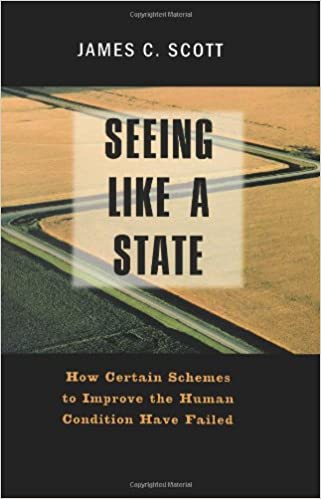
This post is a reflection on the conflicting worldviews that reformers and teachers use in trying to understand teaching and learning in classrooms. It draws on the insights from one of my favorite books, James Scott's Seeing Like a State. The text itself comes from chapter 5 of my book, Someone Has to Fail. The … Continue reading Insights from James Scott about the Conflicting Worldviews of Reformers and Teachers