In this post, I introduce my new book, The Emergent Genius of American Higher Education, which is now available on Amazon. Below is the book's introduction, which provides an overview of the issues it raises and gives summaries of the 23 chapters: Introduction This book is a collection of pieces I wrote about American … Continue reading My New Book: The Emergent Genius of American Higher Education
Marx’s “The Fetishism of Commodities” and Its Implications for Education
This post is a classic piece by Karl Marx, “The Fetishism of Commodities and the Secret Thereof.” It’s the last section of the first chapter in Capital, volume 1. This analysis had a big impact on me when I first read it in grad school, and it has shaped a lot of my own work. At … Continue reading Marx’s “The Fetishism of Commodities” and Its Implications for Education
Life on the Margins: Why Teacher Ed Has So Little Impact on Ed Policy
This post is a paper I presented as part of a panel on the politics of teacher education at the annual meeting of the American Association for Colleges of Teacher Education (AACTE) in 2005. It was published that same year in the Journal of Teacher Education. Here’s a link to the original. It is going to … Continue reading Life on the Margins: Why Teacher Ed Has So Little Impact on Ed Policy
Frank Bruni — For the Love of Sentences
This post is a recent column by Frank Bruni in the times, part of his series "For the Love of Sentences." Here's a link to the original. Enjoy. For the Love of Sentences Image Credit...Chang W. Lee/The New York Times In The Autopian, Matt Hardigree explained one carmaker’s advantage: “You don’t buy a Subaru so much as you … Continue reading Frank Bruni — For the Love of Sentences
Sermon on Educational Research
This is a piece I published in 2012 in Bildungsgeschichte: International Journal for the Historiography of Education. It draws on my experience over the years working with doctoral students in education. The advice, basically, is to approach your apprenticeship in educational research doing the opposite of what everyone else tells you to do. Hope you like it. SERMON ON EDUCATIONAL RESEARCH … Continue reading Sermon on Educational Research
Carly Ann York — In Defense of “Silly” Science
This post is an essay by Carly Ann York recently published in the Chronicle Review. Here's a link to the original. The topic could not be more timely: A defense of the value of basic research. This is the kind of research that is not aimed at solving a particular problem but at simply exploring an … Continue reading Carly Ann York — In Defense of “Silly” Science
The Exceptionalism of American Higher Education
This post is an op-ed I published in 2018 on the online international opinion site, Project Syndicate. The original is hidden behind a paywall; here are PDFs in English, Spanish, and Arabic. It's a brief essay about what is distinctive about the American system of higher education, drawn from my book, A Perfect Mess: The … Continue reading The Exceptionalism of American Higher Education
Larry Cuban — Success, Failure, and “Mediocrity” in U.S Schools
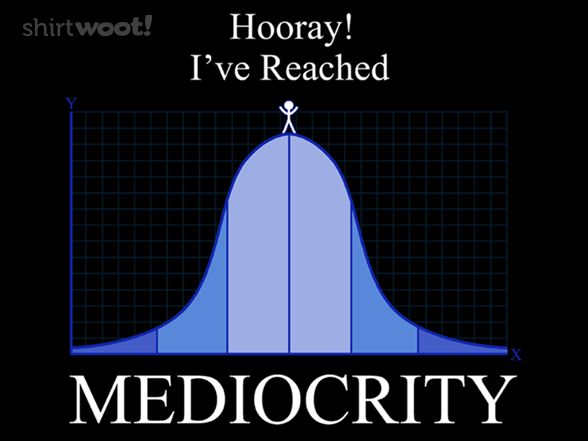
This post is a very recent piece by Larry Cuban, which he posted on his blog two days ago. I just love it. He asks, What's the problem with being an average student? How did average school achievement become redefined as mediocre? This piece picks up on a theme I've been working on in … Continue reading Larry Cuban — Success, Failure, and “Mediocrity” in U.S Schools
No Exit: Public Education as an Inescapably Public Good
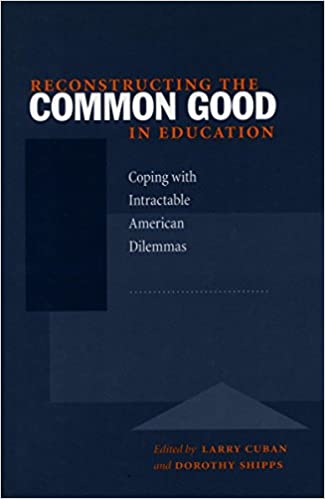
This post is a piece I originally published in a 2000 book honoring David Tyack, Reconstructing the Good in Education: Coping with Intractable American Dilemmas. which was edited by Larry Cuban and Dorothy Shipps. Here's a link to a PDF of the chapter. A few years ago I did a short post about Albert Hirschman's … Continue reading No Exit: Public Education as an Inescapably Public Good
Frederick Douglass’s “What to the Slave Is the Fourth of July”
I'm posting today one of the greatest speeches ever given, from that master of rhetoric, Frederick Douglass. It demonstrates the power of language to make arguments and change hearts. In a time like ours, when rhetoric is used to promote the worst social ills, it's gratifying to see what it can do in the right … Continue reading Frederick Douglass’s “What to the Slave Is the Fourth of July”