The Triumph and Tragedy of the Byzantine Empire — How It Preserved the West and Devastated the East

This post is about, of all things, the Byzantine Empire.  Unlike its western counterpart, what is usually called the Roman Empire, it has received little respect over the years.  Even the name is a calumny (drawn from the name of the original Greek city of Byzantium that later became the empire's capital, Constantinople), which was … Continue reading The Triumph and Tragedy of the Byzantine Empire — How It Preserved the West and Devastated the East

Peculiar Problems of Preparing Educational Researchers

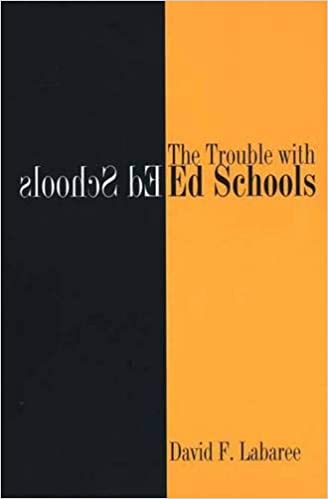
This post is a chapter from my 2004 book, The Trouble with Ed Schools.  Here's a link to an earlier version that was published in 2003 in Educational Researcher.   I wrote this in response to my experience teaching doctoral students in the Department of Teacher Education at Michigan State University.  Nearly all of the students … Continue reading Peculiar Problems of Preparing Educational Researchers

Steven Mintz — When Words Still Mattered: Shakespeare, Language, and the Birth of Historical Consciousness

This post is an essay by historian Steven Mintz, recently published in his Substack.  Here's a link to the original.  I strongly recommend that you check out his posts, which are both prolific and memorable. Here he weaves together two arguments around Shakespeare's historical plays.  One is about the power of his language.  The other … Continue reading Steven Mintz — When Words Still Mattered: Shakespeare, Language, and the Birth of Historical Consciousness

Beverly Gage: The American University Is in Crisis. Not for the First Time.

This post is an essay by Beverly Gage published recently in the New York Times.  Here's a link to the original. In it, she draws on Richard Hofstadter's 1963 book, Anti-Intellectualism in American Life, to show how this is not the first time that American universities found themselves the target of political attacks.  Let's not forget the … Continue reading Beverly Gage: The American University Is in Crisis. Not for the First Time.

Larry Cuban: School Reform Since “A Nation at Risk” Has Done Little to Promote Economic Growth

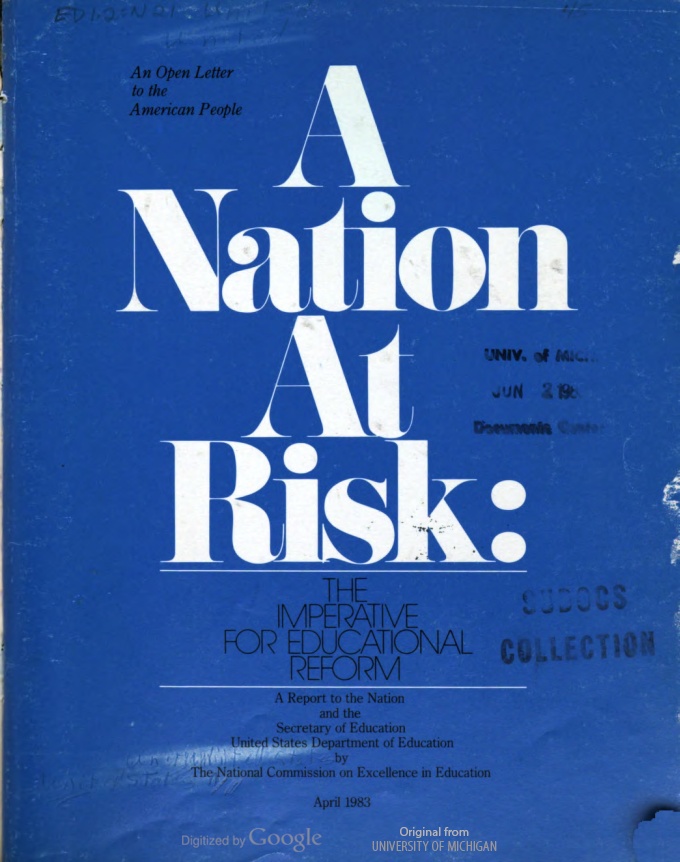
This post is a recent blog entry by Larry Cuban.  Here's a link to the original.  He is making a strong case against the human capital rationale that has grounded the school reform movement in the last 50 years.  The theory is that the primary social contribution of public education is its ability to stimulate … Continue reading Larry Cuban: School Reform Since “A Nation at Risk” Has Done Little to Promote Economic Growth

Gordon Wood — America Is a Creedal Nation

This post is an essay by one of my favorite historians, Gordon Wood, who published it few days ago in the Wall Street Journal.  Here's a link to the original. In anticipation of the upcoming 250th anniversary of the Declaration of Independence, he argues that the US is a distinctive in being a nation build on … Continue reading Gordon Wood — America Is a Creedal Nation

An Affair to Remember: America’s Brief Fling with the University as a Public Good

This post is an essay about the brief but glorious golden age of the US university during the three decades after World War II.   American higher education rose to fame and fortune during the Cold War, when both student enrollments and funded research shot upward. Prior to World War II, the federal government showed little … Continue reading An Affair to Remember: America’s Brief Fling with the University as a Public Good

James Marriott — The Dawn of the Post-Literate Society and the End of Civilisation

This post is a powerfully depressing essay by James Marriott, published in his Substack.  Here's a link to the original. Here's an overview of his argument: More than three hundred years after the reading revolution ushered in a new era of human knowledge, books are dying. Numerous studies show that reading is in free-fall. Even … Continue reading James Marriott — The Dawn of the Post-Literate Society and the End of Civilisation

On Writing: How the King James Bible and How It Shaped the English Language and Still Teaches Us How to Write

When you're interested in improving your writing, it's a good idea to have some models to work from.  I've presented some of my favorite models in this blog.  These have included a number of examples of good writing by both academics (Max Weber, E.P. Thompson, Jim March, and Mary Metz) and nonacademics (Frederick Douglass, Elmore Leonard). … Continue reading On Writing: How the King James Bible and How It Shaped the English Language and Still Teaches Us How to Write

E.P. Thompson: Time, Work-Discipline, and Industrial Capitalism

This post is a tribute to a wonderful essay by the great British historian of working-class history, E. P. Thompson.  His classic work is The Making of the English Working Class, published in 1966.  The paper I'm touting here provides a lovely window into the heart of his craft, which is an unlikely combination of … Continue reading E.P. Thompson: Time, Work-Discipline, and Industrial Capitalism