Perils of the Professionalized Historian

This is a short piece about the problems that professionalism poses for the academic historian.  History is a different kind of subject, and too often academic rigor gets in the way of telling the kinds of historical accounts that we need. An earlier version was published in 2017 in the International Journal of the Historiography of Education. Perils … Continue reading Perils of the Professionalized Historian

How the Fall of Empire Spurred the Rise of Modernity — and Parallels with the Rise of US Higher Ed

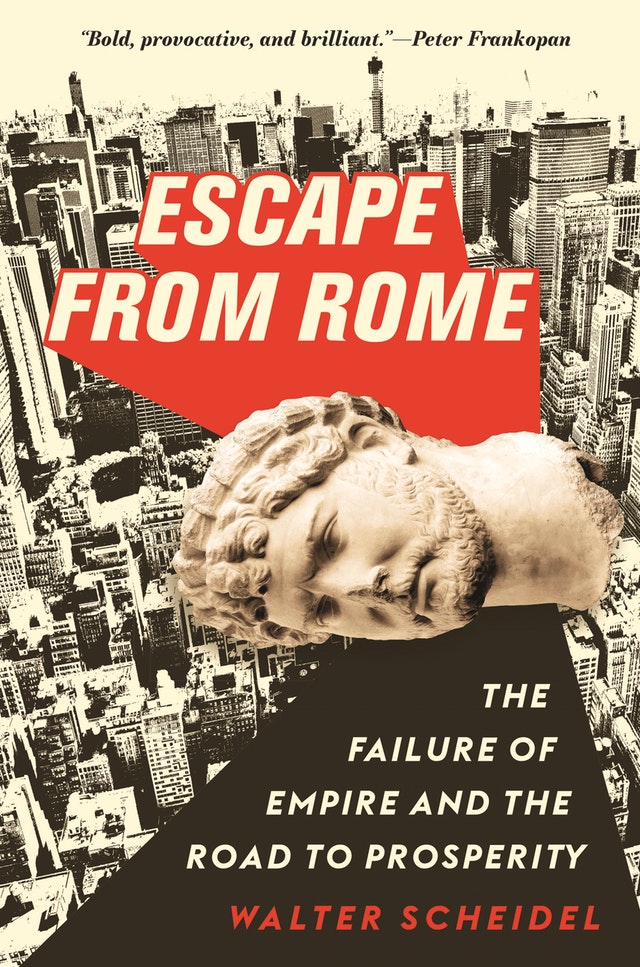
This post is a commentary on historian Walter Scheidel’s book, Escape from Rome, which is a stunningly original analysis of a topic that has long fascinated scholars like me:  How did Europe come to create the modern world?  This post is republished in my new book, The Emergent Genius of American Higher Education. Scheidel examines … Continue reading How the Fall of Empire Spurred the Rise of Modernity — and Parallels with the Rise of US Higher Ed

Steven Mintz — History with a Human Soul

This post is an essay by historian Steven Mintz from his Substack.  Here's a link to the original.  In it, he explores the need to balance structure and agency in the way we write history.  And his model for doing this is Tolstoy.  This is an overview of his argument: Yet War and Peace is no exercise in … Continue reading Steven Mintz — History with a Human Soul

Frederick Douglass’s “What to the Slave Is the Fourth of July”

I'm posting today one of the greatest speeches ever given, from that master of rhetoric, Frederick Douglass.  It demonstrates the power of language to make arguments and change hearts.  In a time like ours, when rhetoric is used to promote the worst social ills, it's gratifying to see what it can do in the right … Continue reading Frederick Douglass’s “What to the Slave Is the Fourth of July”

Why We Need Histories of Education

This is a piece I wrote a few years ago, which had been rattling around in my head for a long time.  The issue is to figure out what role histories of education should play in the formation of educational policy. My short answer is that we should produce the histories we need rather than … Continue reading Why We Need Histories of Education

Garry Wills on the History of the Venetian Empire

This post is a reflection on the peculiar history and social structure of imperial Venice, drawing on a 2013 book by Garry Wills, Venice: Lion City -- The Religion of Empire.   On the surface of it, Venice was the unlikely hub of an empire. It was a city-state with a small population and no sizeable … Continue reading Garry Wills on the History of the Venetian Empire

When Is School the Answer to What Social Problems?

This post is a lecture I gave at University of Luxembourg in 2011, which was published in a book, edited by Daniel Tröhler and Ragnhild Barbu,  Education Systems in Historical, Cultural, and Sociological Perspectives.  It draws on material from my 2010 book, Someone Has to Fail. This essay is one of 21 pieces included in my … Continue reading When Is School the Answer to What Social Problems?

Ezra Klein — You Try to Build Anything, and You’re Stepping into Quicksand

This post is a recent op-ed by Ezra Klein from the New York Times.  Here's a link to the original.  It draws on his terrific new book, Abundance, coauthored with Derek Thompson. It's about a core problem facing the country and the Democratic Party, which is that we have made it near impossible to build major … Continue reading Ezra Klein — You Try to Build Anything, and You’re Stepping into Quicksand

The State as Organized Crime

This post is a commentary on a classic essay by Charles Tilly, “War Making and State Making as Organized Crime,” which appeared in the 1985 book Bringing the State Back In.  Here’s a PDF of the original chapter.  Given the state of the second Trump administration, there has never been a better to time revisit this analysis.  … Continue reading The State as Organized Crime

Branko Milanovic — Why Were the Balkans Underdeveloped?

This post is an essay by economist Branko Milanovic from his Substack Global Inequality and More 3.0.  Here's a link to the original.   In it he explores a fascinating historical question, which is why the Balkans have always been underdeveloped.  And, as he points out, I do mean always.  It was as true in Roman times … Continue reading Branko Milanovic — Why Were the Balkans Underdeveloped?