Charles Mann — We Live Like Royalty and Don’t Know It

This post is a brief essay by Charles Mann that appeared recently in The Free Press.  Here's a link to the original. His argument is about how we don't appreciate all of the great benefits of the civilization we currently inhabit, which is grounded in the enormous collective accomplishments of our ancestors.  Here's how he … Continue reading Charles Mann — We Live Like Royalty and Don’t Know It

Alan Mikhail — How the Ottomans Shaped the Modern World

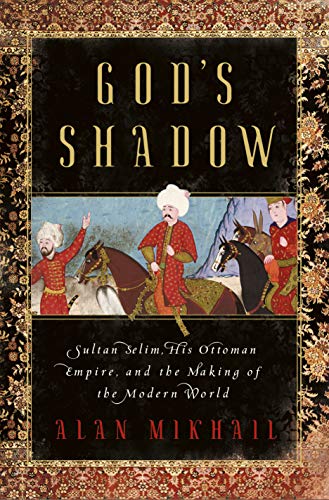
This post is a reflection on the role that the Ottoman Empire played in shaping the modern world.  It draws on a new book by Alan Mikhail, God's Shadow: Sultan Selim, His Ottoman Empire, and the Making of the Modern World.   The Ottomans are the Rodney Dangerfields of empires: They don't get no respect.  If … Continue reading Alan Mikhail — How the Ottomans Shaped the Modern World

What if Napoleon Had Won at Waterloo?

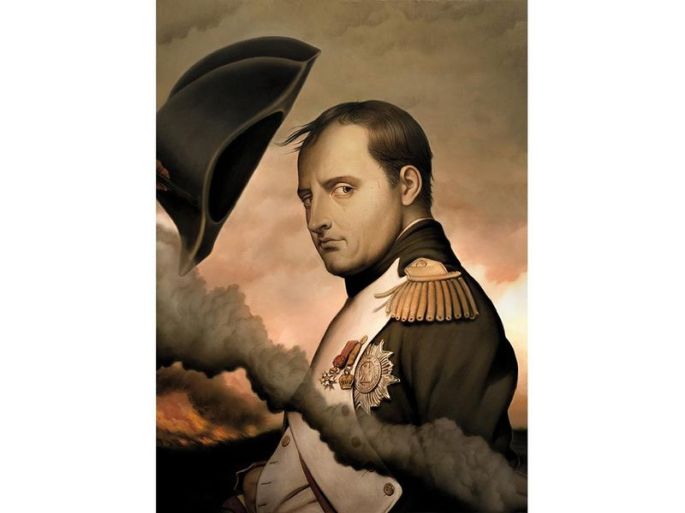
Today I want to explore an interesting case of counterfactual history.  What would have happened if Napoleon Bonaparte had won in 1815 at the Battle of Waterloo?  What consequences might have followed for Europe in the next two centuries?  That he might have succeeded is not mere fantasy.  According to the victor, Lord Wellington, the … Continue reading What if Napoleon Had Won at Waterloo?

What If Napoleon Had Won at Waterloo

What If Napoleon Had Won at Waterloo Today I want to explore an interesting case of counterfactual history.  What would have happened if Napoleon Bonaparte had won in 1815 at the Battle of Waterloo?  What consequences might have followed for Europe in the next two centuries?  That he might have succeeded is not mere fantasy.  … Continue reading What If Napoleon Had Won at Waterloo

Malcolm Gladwell on What an IQ Test Really Measures

This post is a 2007 piece by Malcolm Gladwell published in the New Yorker.  Here's a link to the original. In this piece, the author does a full Gladwell.  He runs through the social science literature about a topic around an intriguing interpretive angle.  Here the issue is to figure out what IQ really measures. … Continue reading Malcolm Gladwell on What an IQ Test Really Measures

Beneficent Buffoon — The Case of Napoleon III

History is full of ironies.  One is that sometimes buffoons can be more beneficent national leaders than great men.  A case in point is Napoleon III.  My source for this analysis is the new book by Alan Strauss-Schom, The Shadow Emperor: A Biography of Napoleon III. Louis Napoleon Bonaparte was the undistinguished nephew and heir … Continue reading Beneficent Buffoon — The Case of Napoleon III

Blaustein: Searching for Consolation in Max Weber’s Work Ethic

  Last summer I posted a classic lecture by the great German sociologist, Max Weber, "Science as a vocation." Recently I ran across a terrific essay by George Blaustein about Weber's vision of the modern world, drawing on this lecture and two other seminal works: the lecture "Politics as a Vocation" (delivered a year after … Continue reading Blaustein: Searching for Consolation in Max Weber’s Work Ethic

What If Napoleon Had Won at Waterloo?

Today I want to explore an interesting case of counterfactual history.  What would have happened if Napoleon Bonaparte had won in 1815 at the Battle of Waterloo?  What consequences might have followed for Europe in the next two centuries?  That he might have succeeded is not mere fantasy.  According to the victor, Lord Wellington, the … Continue reading What If Napoleon Had Won at Waterloo?

What Schools Can Do that Families Can’t: Robert Dreeben’s Analysis

In this post, I explore a key issue in understanding the social role that schools play:  Why do we need schools anyway?  For thousands of years, children grew up learning the skills, knowledge, and values they would need in order to be fully functioning adults.  They didn't need schools to accomplish this.  The family, the … Continue reading What Schools Can Do that Families Can’t: Robert Dreeben’s Analysis